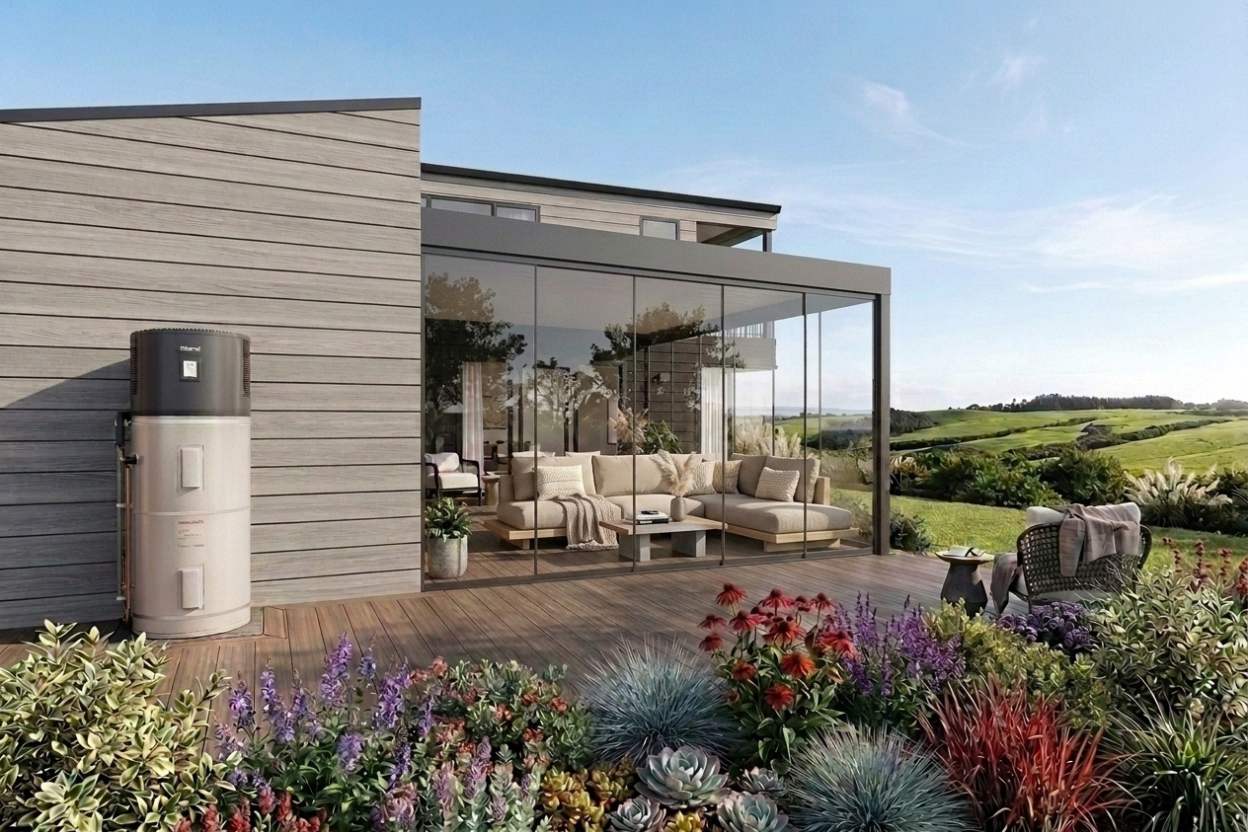
Your hot water cylinder is probably the biggest power draw in the house. A hot water heat pump pulls heat from the outside air instead of running an element, and uses up to 75% less electricity to do it. Most people get the cost back through lower power bills in a few years. If you're still running an old electric cylinder it's worth looking at.
Fully licensed trade professionals who know NZ plumbing standards inside out. The specialist I recommend works with registered plumbers and electricians on every hot water install.
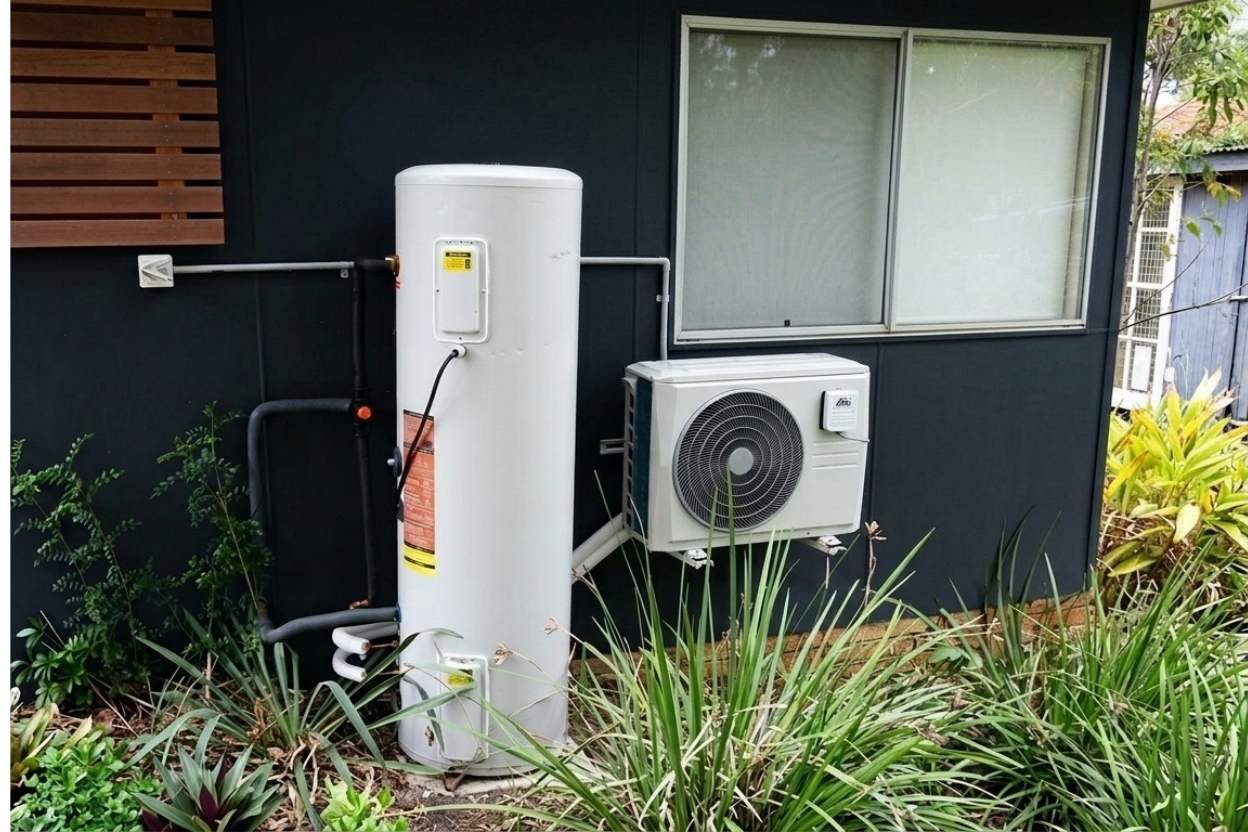
Hot water heating makes up about a third of the average NZ household's power bill. Most homes are still using an old electric resistance cylinder, which heats water by cooking it with an element, the most expensive way to do it.
It works like a fridge in reverse. Instead of pumping heat out to keep your milk cold, it sucks heat in from the air to get your water steaming hot. Because it's moving heat instead of making it, you stop paying to cook your water with an old element.
For a typical 3-person Central Auckland household, that's a saving of around $284 a year switching from an electric cylinder. A family of four can save $1,000 or more per year. Over the life of the unit, the savings dwarf the upfront cost.
Homes still on LPG hot water see the biggest savings. Typical saving: $500 to $800 per year.
The most common upgrade in Central Auckland. Typical saving: $284 to $1,000+ per year depending on household size.
If you have solar on your roof, a hot water heat pump running on your own electricity is the most cost-effective hot water option available.
Not all hot water heat pumps are installed the same way. The right type for your home depends on your outdoor space, where your current cylinder sits, and your budget. My Mt Eden specialist will go through all three options with you on the site visit.
The heat pump and cylinder are combined into one outdoor unit. Simplest to install and the most common choice for Central Auckland homes with good outdoor access. He installs it outside and connects it to your existing plumbing.
Most popularThe heat pump sits outside, the cylinder can be inside. More flexible for homes where outdoor space is tight. Great for the narrower Mt Eden sections where you don't want a large tank blocking the path. Split systems also have larger compressors, so they heat water faster, which suits bigger families.
Most flexibleIf your current cylinder is in good condition, the specialist I recommend can retrofit a heat pump unit to connect to it rather than replacing the whole system. This is the most cost-effective option if the cylinder has years of life left in it. He will check the cylinder on the site visit and tell you honestly whether it's worth keeping.
Most affordableMost Central Auckland homes are a good fit. Here is what works well and what to watch for.
All prices include supply and installation. Costs vary by unit type, size and installation complexity.
| System Type | Best For | Estimated Cost |
|---|---|---|
| Retrofit to existing cylinder | Cylinder in good condition, most affordable upgrade | $2,500 to $4,500 |
| Integrated unit, 180 to 250 litre | Average household of 2 to 4 people, good outdoor space | $3,500 to $6,000 |
| Large integrated unit, 300 litre+ | Larger households or high hot water use | $5,500 to $8,000 |
| Split system | Tight sections, big families needing fast recovery | $5,000 to $9,000 |
| Premium unit with advanced controls | Solar integration, smart scheduling, large homes | $7,000 to $13,000+ |
All prices include supply, installation, plumbing connections and commissioning. The only accurate price is an on-site quote from the specialist I recommend in Mt Eden.
The specialist I refer installs the major brands with strong track records in NZ homes. He is not tied to any supplier, so you get the right unit for your home, not whatever earns the highest margin.
He will recommend the right brand and size for your household and installation location.
Fill in the form and I will match you with the specialist I trust in Mt Eden. He will call you back to talk through what you need and what it would cost. No pressure, no obligation.